

Dovetail Joints
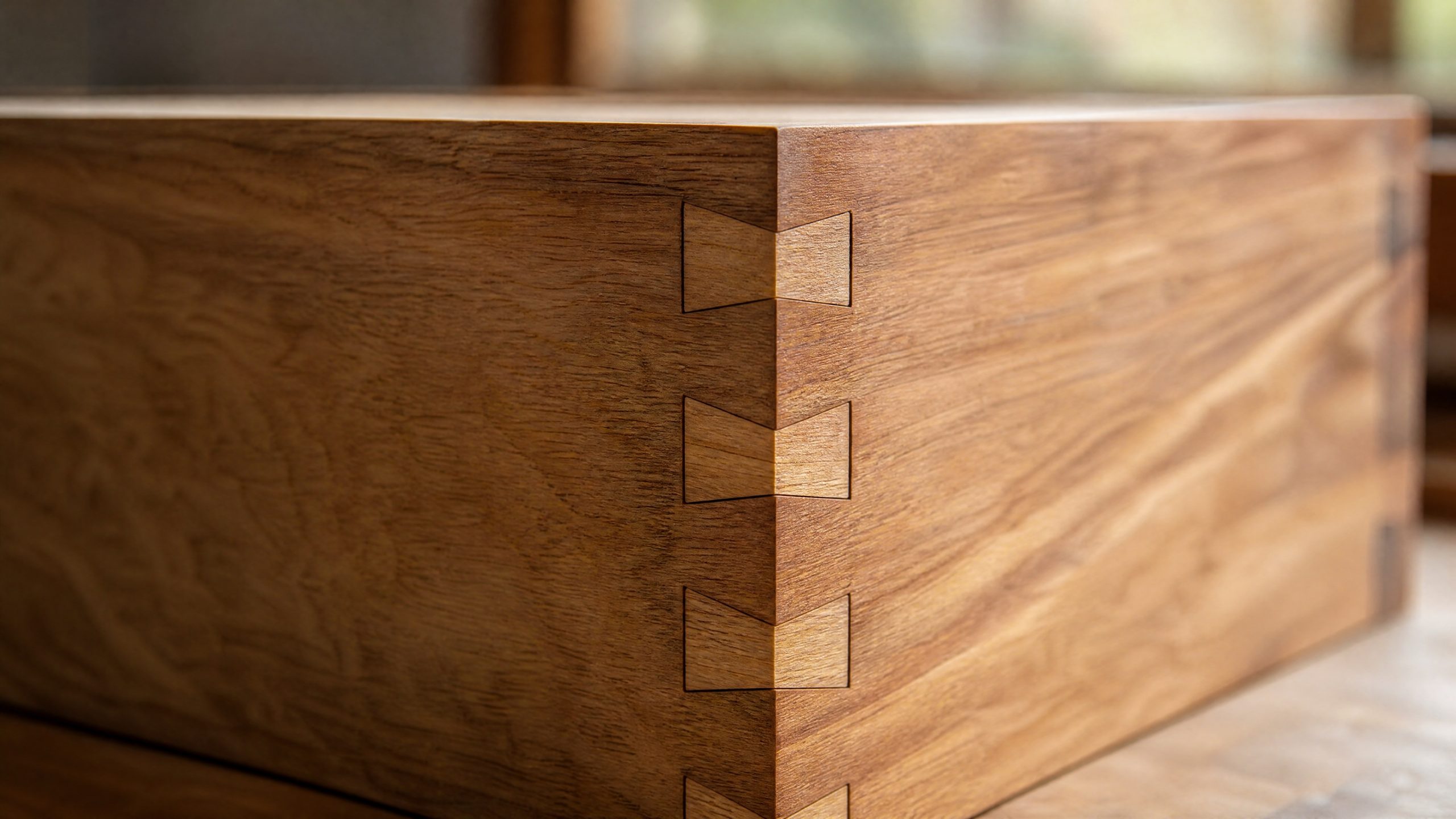
Dovetail Joints: The Hallmark of Quality Woodworking
When it comes to fine woodworking, few joinery methods are as respected as the dovetail joint. Recognized for its exceptional strength, durability, and timeless appearance, the dovetail joint has long been considered a mark of true craftsmanship. Whether found in heirloom furniture, handcrafted cabinets, or decorative boxes, dovetail joints continue to be one of the most reliable and attractive ways to join two pieces of wood.
What Is a Dovetail Joint?
A dovetail joint is an interlocking woodworking joint that connects two pieces of wood without the need for screws, nails, or other mechanical fasteners. The joint consists of two complementary parts: tails and pins.
The tails are cut into one board and resemble the shape of a dove’s tail, which gives the joint its name. The pins are cut into the adjoining board and fit precisely between the tails. This interlocking design creates a joint that naturally resists being pulled apart in one direction. When combined with wood glue and proper clamping, a dovetail joint becomes exceptionally strong in all directions.
The durability of dovetail joinery is easy to see in antique furniture. Walk through any antique store and inspect the drawers of well-made furniture pieces—you’ll likely find dovetail joints that have remained intact for decades, or even centuries, serving as a lasting testament to their strength and quality.
Advantages of Dovetail Joints
Woodworkers value dovetail joints for several reasons:
- Exceptional strength and durability
- Large gluing surface for maximum bond strength
- Interlocking design that resists separation
- Attractive appearance that showcases craftsmanship
- Can hold together mechanically even before glue is applied
- Long-lasting performance suitable for heirloom-quality projects
Disadvantages of Dovetail Joints
While highly effective, dovetail joints do present some challenges:
- They require precise layout and cutting techniques
- Hand-cut dovetails can be time-consuming to produce
- Poorly executed joints lose both strength and visual appeal
- Beginners may find them difficult without specialized tools or jigs
Fortunately, modern woodworking tools have made creating accurate dovetail joints much more accessible than in the past.
5 Common Types of Dovetail Joints
Different projects require different styles of dovetail joints. Understanding the available options will help you select the right joint based on both function and design.
1. Through Dovetail
The through dovetail is the most traditional and recognizable form of dovetail joinery. In this design, both the pins and tails are visible from the outside surfaces of the assembled piece.
Because the joinery is fully exposed, through dovetails are often used to showcase craftsmanship while providing excellent strength. Common applications include:
- Boxes
- Cabinets
- Chests
- Frames
- Drawer construction
2. Half-Blind Dovetail
A half-blind dovetail conceals the joint from the front face of the workpiece while remaining visible from the side. The tails fit into sockets that do not extend all the way through the front board, hiding the end grain and creating a cleaner appearance.
This style is commonly used when attaching drawer fronts to drawer sides, allowing the strength of dovetail joinery without exposing the joint on the front of the furniture.
3. Secret Mitered Dovetail
Often considered one of the most advanced forms of dovetail joinery, the secret mitered dovetail combines strength with complete visual concealment.
Also known as a mitered blind dovetail, this joint features a 45-degree miter on the outside corner while hiding the dovetail structure within the joint itself. The result is a seamless corner appearance with the strength of traditional dovetails.
This joint is frequently used in:
- High-end cabinetry
- Fine furniture
- Decorative boxes
- Luxury woodworking projects
4. Sliding Dovetail
Unlike traditional corner joints, a sliding dovetail joins two boards at a right angle within the field of a board rather than at its edge.
The tail is cut on one component and slides into a matching socket on the other. Many woodworkers slightly taper the socket, allowing the joint to slide together easily while becoming tighter as it reaches its final position.
Sliding dovetails are often used for:
- Shelving
- Cabinet dividers
- Drawer partitions
- Structural interior components
5. Full-Blind Dovetail
The full-blind dovetail completely conceals the joinery from both the inside and outside surfaces of the project. While it provides the same strength as traditional dovetails, none of the pins or tails are visible once assembled.
Because of the precision required, this joint is typically reserved for high-end furniture and advanced woodworking projects where aesthetics are a top priority.
Modern Tools Make Dovetails More Accessible
Traditionally, cutting dovetail joints by hand was considered a master-level woodworking skill requiring years of practice to perfect. Today, woodworkers can achieve precise, repeatable results using modern tools such as dovetail jigs, routers, and specialized dovetail bits.
These tools make it possible to create professional-quality dovetail joints efficiently while maintaining the strength and beauty that have made this joinery method a woodworking favorite for generations.
Final Thoughts
Choosing the right dovetail joint depends on your project’s design, function, and desired appearance. Whether you opt for a traditional through dovetail, a concealed half-blind joint, or an elegant secret mitered dovetail, these joints provide unmatched strength and craftsmanship.
For projects intended to last for generations, dovetail joinery remains one of the best investments a woodworker can make. Combining timeless aesthetics with exceptional durability, dovetail joints continue to represent the gold standard of quality woodworking.
Frequently Asked Questions
What is the difference between a through dovetail and a half-blind dovetail?
A through dovetail is visible from all sides and is commonly used in boxes, frames, and cabinet construction. A half-blind dovetail hides the joint from the front, making it ideal for drawer fronts and furniture where a clean exterior appearance is important.
Are dovetail joints the strongest type of wood joint?
Dovetail joints are widely considered among the strongest woodworking joints available. Their interlocking design and large glue surface provide exceptional resistance to pulling forces and long-term wear.
Are dovetail joints difficult to make?
Hand-cut dovetails require precision, patience, and practice. However, modern dovetail jigs, routers, and specialized dovetail bits make creating accurate, repeatable joints much easier for both beginners and experienced woodworkers.
What are the disadvantages of dovetail joints?
The primary disadvantages are the time and skill required to cut them accurately. Poorly fitted dovetails can compromise both the strength and appearance of the finished joint.
Only those who will risk going too far can possibly find out how far one can go.
— T.S. Eliot —